
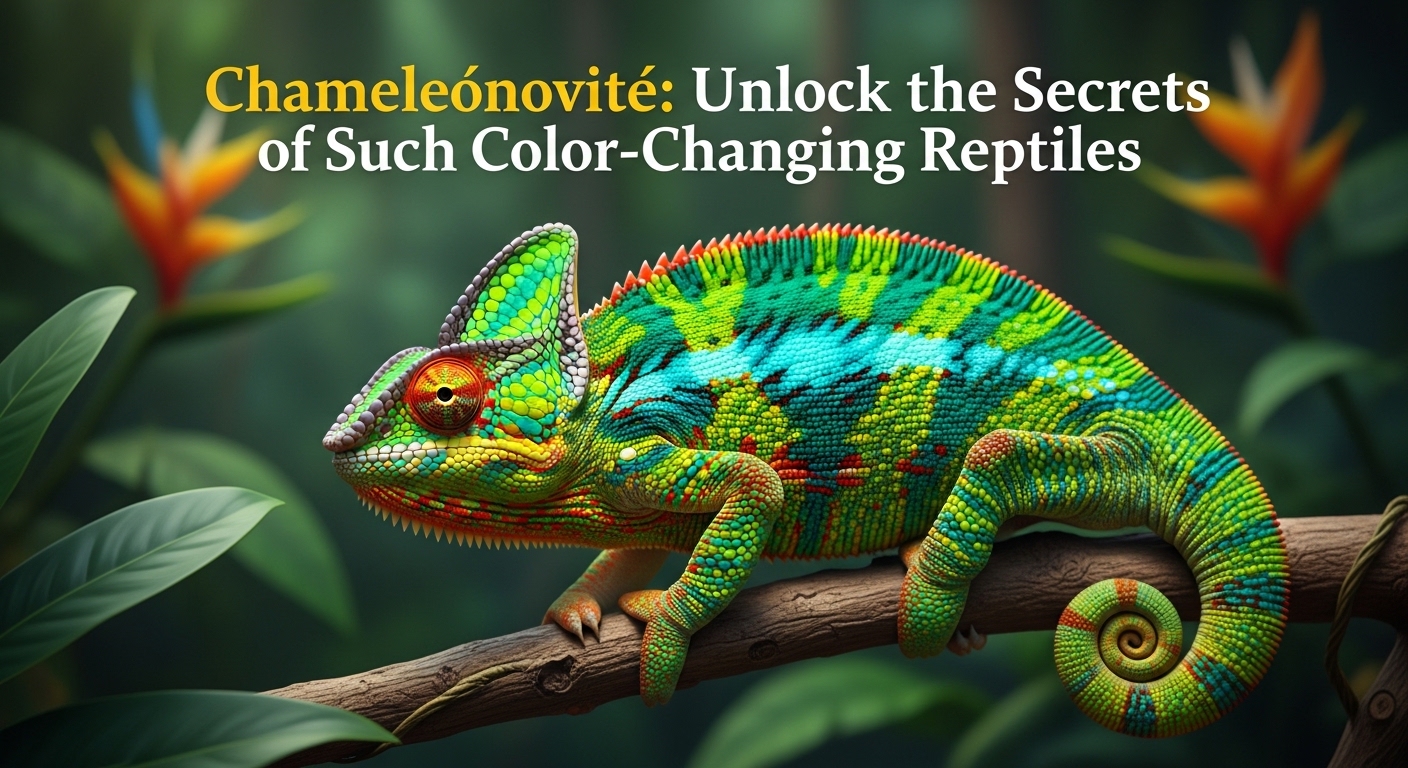
The term Chameleónovité refers to a fascinating family of reptiles known for their remarkable ability to change color, their independently moving eyes, and their specialized hunting techniques. Found mainly in Africa, Madagascar, parts of Europe, and Asia, Chameleónovité have captured the imagination of scientists, nature enthusiasts, and casual observers alike. These unique reptiles are more than just masters of camouflage; they are highly adapted creatures with complex behaviors and ecological importance.
Understanding Chameleónovité is essential not only for appreciating biodiversity but also for recognizing the environmental challenges these animals face. From habitat loss to illegal wildlife trade, their survival is increasingly threatened, making awareness and conservation efforts more critical than ever.
What Are Chameleónovité
Chameleónovité belong to the reptile family Chamaeleonidae. They are primarily arboreal, meaning they spend most of their lives in trees and shrubs. Their physical features are highly specialized for this lifestyle, including zygodactylous feet that allow them to grip branches and prehensile tails that act as a fifth limb.
These reptiles vary greatly in size, from tiny species just a few centimeters long to larger ones exceeding half a meter. Despite their differences, all Chameleónovité share certain defining characteristics such as turret-like eyes and long, sticky tongues used to catch prey.
Unique Physical Characteristics of Chameleónovité
Color Changing Ability in Chameleónovité
One of the most well-known traits of Chameleónovité is their ability to change color. Contrary to popular belief, this is not primarily for camouflage. Instead, color changes are often used for communication, temperature regulation, and emotional expression.
The skin of Chameleóinovité contains specialized cells called chromatophores. These cells expand or contract to reflect different wavelengths of light, resulting in various colors. Factors such as light, temperature, and mood can influence these changes.
Eyes and Vision of Chameleónovité
Another extraordinary feature of Chameleónovité is their eyes. Each eye can move independently, allowing the reptile to observe two different directions simultaneously. This gives them a nearly 360-degree field of vision, which is invaluable for spotting predators and prey.
When hunting, both eyes can focus on a single target, providing depth perception and accuracy. This visual system is among the most advanced in the reptile world.
Tongue Mechanics in Chameleónovité
The tongue of Chameleónovité is a marvel of biological engineering. It can extend up to twice the length of the animal’s body and is propelled at incredible speed. The tip of the tongue is sticky, enabling it to capture insects with precision.
This hunting method allows Chameleóinovité to remain still and conserve energy while effectively catching prey from a distance.
Habitat and Distribution of Chameleónovité
Chameleónovité are predominantly found in tropical and subtropical regions. Madagascar is home to the highest diversity of species, making it a hotspot for these reptiles. They also inhabit parts of mainland Africa, southern Europe, the Middle East, and Asia.
Their habitats range from rainforests and savannas to mountainous regions and even deserts. Each species of Chameleóniovité has adapted to its specific environment, demonstrating remarkable ecological flexibility.
The table below illustrates the major habitats and associated species diversity:
| Habitat Type | Region | Chameleónovité Species Examples | Adaptation Features |
|---|---|---|---|
| Tropical Rainforest | Madagascar | Furcifer pardalis | Prehensile tail, cryptic coloration |
| Savanna | East Africa | Chamaeleo dilepis | Camouflage in grasslands, rapid color change |
| Arid Scrublands | Southern Africa | Bradypodion pumilum | Small size, heat tolerance, cryptic colors |
Understanding the distribution of Chameleónovité is essential for developing conservation strategies. Many species are highly specialized, making them vulnerable to even minor environmental changes.
Diet and Feeding Behavior of Chameleónovité
Chameleónovité are primarily insectivorous, feeding on a variety of insects such as crickets, grasshoppers, and flies. Larger species may also consume small birds, reptiles, or rodents.
Their feeding strategy relies heavily on patience and precision. They often remain motionless for extended periods, blending into their surroundings before striking their prey with their rapid tongue.
Hydration is another important aspect of their diet. Chameleóinovité typically drink water from droplets on leaves rather than from standing water sources.
Reproduction and Life Cycle of Chameleónovité
The reproductive behavior of Chameleóinovité varies among species. Most are oviparous, meaning they lay eggs, while some are ovoviviparous, giving birth to live young.
Females usually lay eggs in burrows or hidden locations to protect them from predators. The incubation period can range from a few months to over a year, depending on the species and environmental conditions.
Young Chameleóinovité are independent from birth and must fend for themselves immediately. Their survival depends on their ability to blend in and avoid predators.
Behavioral Traits of Chameleónovité
Chameleónovité are generally solitary animals. They are highly territorial and may display aggressive behavior toward others of their kind, especially during mating season.
Communication among Chameleóinovité often involves color changes, body posture, and hissing sounds. Bright colors may indicate dominance or readiness to mate, while darker shades can signal stress or submission.
Despite their slow movements, Chameleóinovité are highly alert and capable of rapid action when necessary.
Importance of Chameleónovité in Ecosystems
Chameleónovité play a vital role in maintaining ecological balance. As predators of insects, they help control pest populations, which can benefit agriculture and natural vegetation.
They also serve as prey for larger animals, contributing to the food chain. Their presence in an ecosystem often indicates a healthy environment, as they are sensitive to changes in habitat and climate.
Threats Facing Chameleónovité
Habitat Loss Affecting Chameleónovité
One of the biggest threats to Chameleóinovité is habitat destruction. Deforestation, urbanization, and agricultural expansion are reducing the natural environments these reptiles depend on.
As their habitats shrink, Chameleóinovité are forced into smaller areas, increasing competition for resources and exposure to predators.
Illegal Wildlife Trade of Chameleónovité
Chameleóinovité are often targeted for the exotic pet trade. While some species can adapt to captivity, many do not survive due to improper care and stress.
Illegal collection from the wild further threatens their populations, particularly for rare and endemic species.
Climate Change Impact on Chameleónovité
Climate change poses another significant risk to Chameleónovité. Changes in temperature and rainfall patterns can disrupt their habitats and food sources.
Since these reptiles rely on specific environmental conditions, even slight changes can have severe consequences for their survival.
Conservation Efforts for Chameleónovité
Efforts to protect Chameleóinovité include habitat conservation, legal protection, and public education. Many species are now listed under international agreements that regulate trade and promote conservation.
Protected areas and national parks play a crucial role in preserving their natural habitats. Additionally, research and monitoring programs help scientists understand population trends and develop effective conservation strategies.
Raising awareness about the importance of Chameleóinovité is essential for their long-term survival. Responsible pet ownership and support for conservation initiatives can make a significant difference.
How to Support Chameleónovité Conservation
Individuals can contribute to the conservation of Chameleóinovité in several ways. Supporting organizations that work to protect wildlife and habitats is a practical step.
Avoiding the purchase of wild-caught reptiles helps reduce demand in the illegal trade. Educating others about the importance of these animals also plays a key role in their protection.
Simple actions, such as promoting sustainable practices and reducing environmental impact, can indirectly benefit Chameleóinovité and other wildlife.
Fascinating Facts About Chameleónovité
Chameleóinovité are full of surprises. Some species can detect ultraviolet light, enhancing their communication and environmental awareness. Others can inflate their bodies to appear larger and deter predators.
Their slow, swaying movements mimic leaves in the wind, adding another layer of camouflage. Despite their reputation for blending in, some Chameleóinovité display incredibly bright and vibrant colors.
Each species has its own unique adaptations, making them one of the most diverse and intriguing groups of reptiles.
Conclusion on Chameleónovité
Chameleóinovité are truly extraordinary creatures that showcase the wonders of evolution and adaptation. From their color-changing abilities to their specialized hunting techniques, they offer endless fascination.
However, their survival is increasingly at risk due to human activities and environmental changes. Protecting Chameleóniovité requires a collective effort, combining conservation, education, and responsible behavior.
By understanding and appreciating these remarkable reptiles, we can help ensure that Chameleóneovité continue to thrive in the wild for generations to come.