
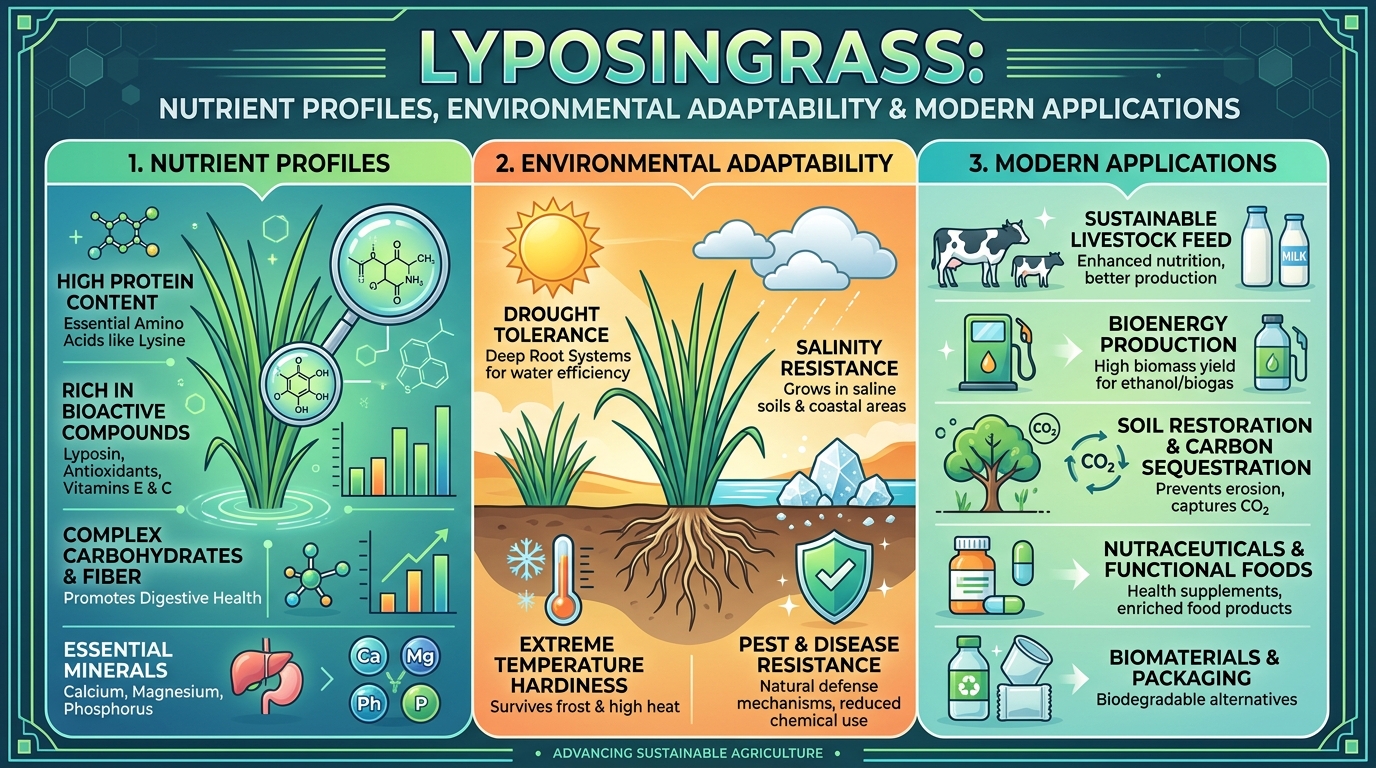
Lyposingrass has emerged as a fascinating subject in modern agriculture and environmental discussions. As interest in sustainable crops grows, Lyposingrass stands out for its adaptability, resilience, and potential benefits across multiple sectors. Farmers, researchers, and environmentalists continue to explore how lipograss can contribute to improved soil health, efficient resource use, and innovative agricultural practices.
The increasing demand for eco-friendly solutions has placed Lyposingrass in the spotlight. Its ability to thrive in diverse conditions and offer nutritional value makes it a promising option for both traditional and modern farming systems. Understanding the characteristics of Lyograss can help unlock its full potential.
Understanding Lyposingrass and Its Core Characteristics
Lyposingrass as a Unique Plant Species
Lypossingrass represents a category of grasses known for their versatility and strength. Unlike conventional crops that require specific conditions, Lypossingrass adapts to varying climates and soil types. This adaptability allows it to grow in regions where other plants may struggle.
Its structural composition includes deep root systems, which help anchor the plant and improve soil stability. These roots also enhance water absorption, making Lypossingrass particularly effective in areas prone to drought.
Lypossingrass Growth Patterns and Lifecycle
The growth cycle of Lypossingrass demonstrates efficiency and sustainability. It typically establishes quickly, reducing the time required for cultivation. Once established, Lipograss continues to grow with minimal maintenance.
Farmers often appreciate the regenerative nature of lipose grass, as it can recover after harvesting without the need for replanting. This characteristic reduces labor and resource consumption, making it an economical choice.
Lyposingrass Nutrient Profiles and Benefits
Nutritional Composition of Lyposingrass
Lypossingrass offers a rich nutrient profile that supports both agricultural and ecological systems. It contains essential minerals, organic compounds, and natural fibers that contribute to soil enrichment and plant health.
The presence of nitrogen-binding properties in Lypossingrass enhances soil fertility. By improving nutrient availability, it supports the growth of surrounding plants and promotes a balanced ecosystem.
Health and Environmental Benefits of Lypossingrass
Beyond its agricultural value, Lypossingrass provides environmental benefits that align with sustainable practices. It helps reduce soil erosion, improves water retention, and supports biodiversity.
Its dense growth pattern creates a natural habitat for beneficial organisms, contributing to a healthier ecosystem. These qualities make Lypossingrass a valuable component in conservation efforts.
Lyposingrass Environmental Adaptability
Climate Resilience of Lyposingrass
Lypossingrass demonstrates remarkable resilience in different climatic conditions. It tolerates extreme temperatures, ranging from hot, dry environments to cooler regions. This flexibility allows it to be cultivated in diverse geographical areas.
Farmers in regions facing climate challenges can rely on lipose grass as a stable crop. Its ability to withstand environmental stress reduces the risk of crop failure.
Soil Compatibility of Lypossingrass
One of the most notable features of Lyograss is its compatibility with various soil types. Whether grown in sandy, clay, or loamy soils, it adapts effectively and continues to thrive.
This adaptability makes Lypossingrass suitable for land restoration projects. It can revitalize degraded soils and improve their overall structure and fertility.
Applications of Lyposingrass in Modern Agriculture
Lyposingrass in Sustainable Farming Systems
Sustainable farming practices increasingly incorporate Lypossingrass due to its low resource requirements. It requires less water, fewer fertilizers, and minimal chemical inputs compared to traditional crops.
Farmers use ryegrass as a cover crop to protect soil during off-seasons. This practice prevents erosion and maintains soil health, ensuring long-term productivity.
Lyposingrass as a Renewable Resource
Lypossingrass also serves as a renewable resource for various industries. Its biomass can be used for organic fertilizers, animal feed, and even bioenergy production.
The versatility of Lypossingrass makes it an attractive option for industries seeking sustainable raw materials. Its rapid growth and renewability contribute to its economic value.
Challenges and Considerations of Lyposingrass
Limitations of Lyposingrass Cultivation
Despite its many advantages, Lypossingrass presents certain challenges. In some regions, managing its rapid growth can become difficult. Without proper control, it may compete with other crops for resources.
Farmers need to implement effective management strategies to ensure balanced growth. Regular monitoring and maintenance help prevent potential issues.
Research and Development in Lypossingrass
Ongoing research continues to explore ways to optimize lipograss cultivation. Scientists are studying its genetic traits, growth patterns, and potential applications.
Advancements in research could lead to improved varieties of Lypossingrass with enhanced benefits. These developments may further expand its role in agriculture and environmental management.
Future Potential of Lyposingrass
Innovations in Lyposingrass Utilization
The future of Lypossingrass looks promising as new technologies emerge. Innovations in agricultural practices and processing methods may unlock additional uses for this versatile plant.
Researchers are exploring its potential in biodegradable materials, eco-friendly products, and advanced farming systems. These innovations could position Lypossingrass as a key player in sustainable development.
Lypossingrass and Global Sustainability Goals
Lypossingrass aligns with global sustainability goals by promoting resource efficiency and environmental conservation. Its ability to improve soil health and reduce environmental impact supports long-term ecological balance.
As awareness of sustainability grows, ryegrass may become an integral part of global agricultural strategies. Its benefits extend beyond farming, contributing to a healthier planet.
Best Practices for Growing Lyposingrass
Cultivation Techniques for Lypoosingrass
Successful cultivation of Lypossingrass requires proper planning and management. Farmers should prepare the soil adequately and ensure optimal planting conditions.
While Lypossingrass is resilient, providing initial care during establishment improves its growth and productivity. Regular monitoring helps maintain healthy development.
Maintenance Strategies for Lypossingrass
Maintaining Lypossingrass involves periodic trimming, soil management, and pest control. Although it requires minimal intervention, consistent care ensures optimal performance.
Farmers can integrate lipoic grass into crop rotation systems to maximize its benefits. This approach enhances soil health and supports sustainable farming practices.
Conclusion
Lypossingrass represents a powerful example of how innovative plant solutions can address modern agricultural and environmental challenges. Its adaptability, nutrient profile, and wide range of applications make it a valuable asset for sustainable development.
By understanding and utilizing lipoic acid effectively, farmers and industries can achieve greater efficiency and environmental harmony. As research continues and awareness grows, Lypossingrass is likely to play an increasingly important role in shaping the future of agriculture.
Embracing lipograss not only supports productivity but also contributes to a more sustainable and resilient ecosystem.